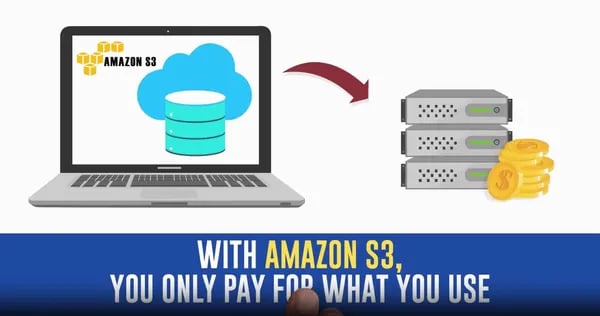



Maximize your business growth by harnessing the full power of Amazon S3 with this brand new over-the-shoulder video series. You're likely not using Amazon S3 to its full capacity, and webhosting companies are the winners, charging fixed fees while you overpay for bandwidth and space you don’t need. But what if there was a reliable, cost-effective solution designed just for you? This step-by-step guide reveals how to get started with Amazon S3 and dramatically save money on hosting fees. You'll discover easy-to-follow instructions for registering, setting up your account, creating buckets, and managing your content efficiently. With Amazon S3, you only pay for what you use—no more fixed fees draining your budget.
Watch me demonstrate secret tips and unknown tactics to truly leverage Amazon S3, helping your business scale without the hassle of traditional webhosting. This video training is your key to unlocking Amazon S3’s full potential.
Did You Know?
Many businesses overpay for webhosting by sticking to fixed monthly plans instead of switching to pay-as-you-go solutions like Amazon S3, which charges only for what you use.
Source: Van-Santen Enterprises Video Training
Understanding Amazon S3 and Its Advantages
Amazon Simple Storage Service (S3) is a cloud storage platform designed to provide scalable, secure, and cost-effective storage solutions. Unlike traditional web hosting that often requires fixed monthly fees and limited storage options, Amazon S3 offers a pay-as-you-go model. This means you only pay for the storage and bandwidth you actually use, making it a much more flexible and affordable option for businesses looking to grow without incurring unnecessary expenses.
One of the main advantages of Amazon S3 is its virtually unlimited scalability. As your content library, website data, or application requirements expand, Amazon S3 grows with you automatically. You no longer need to worry about running out of space or upgrading servers, since the platform adjusts seamlessly according to your usage.
In addition, Amazon S3 guarantees high durability and availability by redundantly storing your data across multiple geographically dispersed facilities. This minimizes the risk of data loss or downtime, which is crucial for any business that depends on reliable web infrastructure. Traditional hosting often cannot match this level of data protection without significantly increasing costs.
Flexibility is another key benefit. With S3, you can configure your storage buckets, manage access permissions, and choose from different storage classes optimized for performance, cost, or archival needs. This allows businesses to tailor their setup precisely to their operational requirements without paying for unnecessary features.
Amazon S3 also integrates smoothly with other Amazon Web Services, such as Amazon CloudFront, providing fast and reliable content delivery worldwide. This makes your websites and applications faster and more responsive for users, contributing to better customer experiences and improved business performance.
Moreover, the pay-only-for-what-you-use pricing model is a game changer for businesses tired of fixed hosting fees. Unlike many web hosting providers that advertise “unlimited” packages, most users end up paying for bandwidth and storage they never fully utilize. Amazon S3 solves this by billing purely on actual data usage, enabling cost savings and helping you avoid common pitfalls of traditional web hosting.
With the Brand New Over-The-Shoulder Video Series On How To Grow Your Business With The Amazon S3 Service, you can learn step-by-step how to maximize the storage and cost benefits of Amazon S3. This training reveals insider tactics to help you save a lot of money, monitor your bandwidth properly, and scale your business efficiently without the headaches of fixed, overpriced hosting plans.
Scalable Storage Capacity
Amazon S3 allows you to store virtually unlimited amounts of data and scales automatically as your needs grow.
Pay-Only-For-What-You-Use Pricing
Unlike fixed monthly fees, Amazon S3 charges based on actual usage, saving money on unused resources.
High Durability and Availability
Your data is stored redundantly across multiple facilities for maximum protection and uptime.
Flexibility and Control
Easily configure buckets, access permissions, and storage classes to fit your specific needs.
Reliable Content Delivery
Amazon S3 integrates seamlessly with Amazon CloudFront for fast, global content distribution.
How Amazon S3 Can Save You Money
Amazon S3 presents a truly cost-effective alternative to traditional web hosting models by using a pay-as-you-go pricing scheme. Unlike conventional hosting providers that charge fixed monthly fees regardless of actual usage, Amazon S3 bills you precisely for what you store and the bandwidth you consume. This can translate into significant savings, especially for businesses with fluctuating or modest storage needs.
Traditional dedicated hosting often locks users into monthly commitments well above $100, even for basic packages. Virtual Private Servers (VPS) offer more flexibility but still require fixed monthly payments, sometimes coupled with additional upgrade fees as your needs grow. In contrast, Amazon S3's pricing is inherently elastic, allowing you to scale storage and bandwidth instantaneously without incurring unnecessary expenses.
The above chart highlights the stark contrast in monthly costs between Amazon S3, traditional dedicated hosting, and VPS hosting. For typical usage scenarios, Amazon S3 costs around $25.75 monthly, while dedicated hosting services can exceed $120, and VPS hosting averages about $70. This alone makes Amazon S3 an attractive option for startups and growing businesses aiming to optimize their expenses.
Moreover, many web hosting companies entice customers with “unlimited” bandwidth or storage plans, which in reality impose hidden constraints or result in overpaying for resources you don't fully utilize. Amazon S3’s transparent, usage-based billing prevents such overcharging. You pay only for what you actually use, so there is no risk of being locked into inflated plans.
The comparison table underscores essential differences between Amazon S3, Bluehost Shared Hosting, and DigitalOcean VPS. Amazon S3 adopts a pay-per-use pricing model, featuring automatic scalability and no setup fees. In contrast, Bluehost charges a fixed monthly fee with limited scalability, and DigitalOcean requires manual upgrades to increase resources, often leading to increased costs.
Bandwidth costs with Amazon S3 are included in the usage fees with no surprise overage charges, unlike many traditional hosts that either limit bandwidth or apply steep overage fees. This makes Amazon S3 an ideal solution for businesses that experience traffic spikes or seasonal demand variations, allowing considerable cost control without sacrificing performance.
Real-world examples illustrate how businesses have reduced expenses by migrating to Amazon S3. Many small to mid-sized companies see their hosting-related overhead drop by 50-70% within the first few months. These savings can then be reinvested into growth initiatives such as marketing, product development, or higher-tier cloud services.
In summary, Amazon S3's pricing flexibility, combined with its reliability and scalability, makes it a potent cost-saving tool for growing businesses. By shedding fixed monthly fees and minimizing wasted resources, you can efficiently manage your hosting expenses while scaling seamlessly as your business needs evolve.
Getting Started with Amazon S3
Starting with Amazon S3 begins by creating an AWS account at aws.amazon.com. Registration requires basic personal and payment information to unlock access to AWS services, including Amazon S3. The sign-up process is straightforward, and you gain immediate entry to explore the platform’s features.
Once logged in, navigate to the AWS Management Console. Here, you’ll find the Amazon S3 dashboard under the “Storage” section. The interface is user-friendly, designed to facilitate easy navigation through your storage buckets and settings without overwhelming complexity. Familiarize yourself with the main console elements such as the bucket list, permission controls, and monitoring tools.
Your first key task is setting up a storage bucket. Choose a unique bucket name and select the ideal AWS region closest to your target audience for cost and performance efficiency. During bucket creation, you can configure access permissions and policies that determine who can read or write data.
For optimization, Amazon S3 offers advanced settings like versioning, lifecycle rules, and storage classes. Enable versioning to keep track of changes and protect your data from accidental deletions. Lifecycle rules help automate cost management by transitioning objects to cheaper storage classes or scheduling deletions. Tuning these settings according to your storage needs ensures you get maximum value and cost savings.
Following this initial setup protocol sets a stable foundation for using Amazon S3 efficiently, preparing your business to scale with a reliable and cost-effective cloud storage solution.
Create Your AWS Account
Sign up at aws.amazon.com by providing your details and payment information to access Amazon S3.
Access the S3 Dashboard
Log into AWS Management Console and navigate to Amazon S3 under Storage services.
Set Up Your First Bucket
Create a storage bucket, configure region, and set permissions for your data.
Optimize Settings
Enable versioning, set lifecycle rules, and adjust storage classes to maximize cost savings.
Creating and Managing Buckets
Amazon S3 organizes your data through buckets, which serve as the foundational containers for storing files. Creating a bucket is the first critical step to harnessing S3’s powerful cloud storage features for your business. The process starts in the AWS Management Console, where you provide a globally unique name for your bucket and select the geographic region closest to your customer base or your operations. This choice impacts latency and cost efficiency.
Next, configure your bucket settings to tailor it to your needs. This includes enabling versioning to keep track of changes and stored file versions, turning on server-side encryption for security, and adding metadata tags for identification and management. These settings help you organize, secure, and automate handling of your data efficiently.
One of Amazon S3’s standout features is its granular permissions system. You can define who accesses each bucket and what actions they are allowed to perform. Permissions can be set using bucket policies, Access Control Lists (ACLs), or IAM roles depending on your organization’s security model. For sharing publicly or with specific users, options range from read-only access to full control. Proper permission management ensures that your data is safeguarded while still accessible to authorized stakeholders or applications.
Uploading content into your bucket is straightforward with the intuitive S3 interface or automation tools like AWS CLI and SDKs. It's advisable to organize your data within folders (prefixes) inside the bucket for easy navigation and management, especially when handling large volumes of files such as images, backups, or website assets.
Effective bucket management also involves ongoing monitoring and optimization. Amazon S3 provides metrics and analytics on storage usage and requests, allowing you to track costs and performance. Adjust lifecycle policies to archive or delete data automatically, helping you reduce unnecessary storage fees. As your business grows, revisiting bucket structure and permissions ensures continued alignment with your operational and security requirements.
Create Bucket
Name your bucket and select region
Configure Settings
Set versioning, encryption, and tags
Set Permissions
Define access policies and sharing rules
Upload Content
Organize files within folders in your bucket
Manage Buckets
Monitor usage and adjust as needed
Tips for Efficient Content Management
Efficient content management on Amazon S3 hinges on organizing your data strategically and keeping costs under control. One effective approach is to categorize your files into specific buckets by project or client. This structure simplifies management and access. Leveraging S3 Intelligent-Tiering automatically shifts your data between access tiers based on usage patterns, which reduces storage costs without manual intervention. Additionally, enabling versioning safeguards your files from accidental overwrites or deletions, providing an essential layer of data protection.
Lifespan management is another valuable feature. With lifecycle policies, you can automate archival or deletion of old data, freeing up space and optimizing storage efficiency. This hands-off method ensures your S3 environment remains cost-effective and clutter-free.
Monitoring your bandwidth usage is equally important to avoid unexpected AWS charges. Amazon CloudWatch is a powerful tool for this purpose; it provides real-time tracking and alerts for usage spikes. Monitoring helps you identify patterns and optimize accordingly.
To minimize bandwidth consumption further, compress your data before uploading. This reduces file sizes and lowers transfer costs. When sharing files, use Amazon S3 pre-signed URLs, which grant secure and temporary access. This controls bandwidth use and limits unauthorized downloads.
By combining strategic storage organization, automated tiering, lifecycle management, vigilant bandwidth tracking, and smart sharing methods, you can maximize Amazon S3’s potential and ensure your business runs smoothly and cost-effectively.
Effective Content Storage with Amazon S3
Maximize your storage strategy by categorizing files and using lifecycle policies to archive or delete old data automatically.
- • Use S3 Intelligent-Tiering to reduce costs by moving data between access tiers based on usage.
- • Organize content into buckets by project or client to streamline management.
- • Enable versioning to protect against accidental overwrites or deletions.
Monitoring Bandwidth and Optimization Tricks
Keep track of data transfer to avoid unexpected costs and optimize storage efficiency using AWS tools.
- • Monitor bandwidth with Amazon CloudWatch to detect usage spikes.
- • Implement data compression before upload to reduce size and bandwidth.
- • Use pre-signed URLs for secure, temporary access to minimize bandwidth waste.
Frequently Asked Questions
Amazon S3 is a reliable cloud storage service from Amazon Web Services designed to securely store and retrieve any quantity of data. This makes it perfect for businesses aiming to scale efficiently without managing physical servers.
The pricing model of Amazon S3 is usage-based. You pay only for the storage space you use, the data you transfer, and the number of requests made. This pay-as-you-go approach can significantly reduce costs compared to traditional fixed hosting plans.
To migrate your existing data to Amazon S3, you can use robust tools like the AWS Command Line Interface (CLI), AWS Transfer Family, or trusted third-party services. These tools streamline the data transfer, ensuring a smooth and hassle-free migration process.
What is Amazon S3?▼
How does Amazon S3 pricing work?▼
Can I move my existing data to Amazon S3 easily?▼
Conclusion
Amazon S3 is a reliable, cost-effective solution that helps you grow your business by eliminating the fixed fees commonly charged by traditional webhosts. Many webhosting companies win by overbilling customers with misleading "Unlimited" packages, but with Amazon S3, you pay only for what you use. This approach can save you a significant amount on hosting costs and bandwidth fees.
The Brand New Over-The-Shoulder Video Series on how to grow your business with Amazon S3 is an amazing offer designed to get you started quickly and confidently. You'll watch step-by-step as the expert explains account setup, bucket creation, content management, and money-saving tactics. The insider tips shared in this training make complex topics easy to understand and apply.
This video training comes with a full 30-day money-back guarantee, so there's no risk in getting started. Don't miss out on this opportunity to save money and scale your business the smart way. Click the button below now to get instant access!
🎯 Key Takeaways: Why This Training is a Must-Have
- → Amazon S3 offers a cost-effective, scalable web hosting solution without fixed fees.
- → Webhosting companies often overcharge with 'Unlimited' packages; Amazon S3 charges only for what you use.
- → The video series provides a step-by-step, over-the-shoulder guide to mastering Amazon S3.
- → Learn to save money on bandwidth and hosting costs effectively with expert tips.
- → Includes a 30-day money-back guarantee, making the investment risk-free.